LogoHealthAIdir
  • Reviews
  • Free Tools
  • Solutions
  • Categories
  • Compare
  • Glossary
  • Blog
  • Pricing
LogoHealthAIdir
← Back to Solutions

Clinical operations leaders · Clinical documentation workflow

AI for Clinical Documentation

Clinical documentation AI should reduce clinician documentation burden while preserving patient consent, clinician review, note quality, and chart accountability.

Published 2026/06/06Last verified 2026/06/06

Pain points

Encounter capture

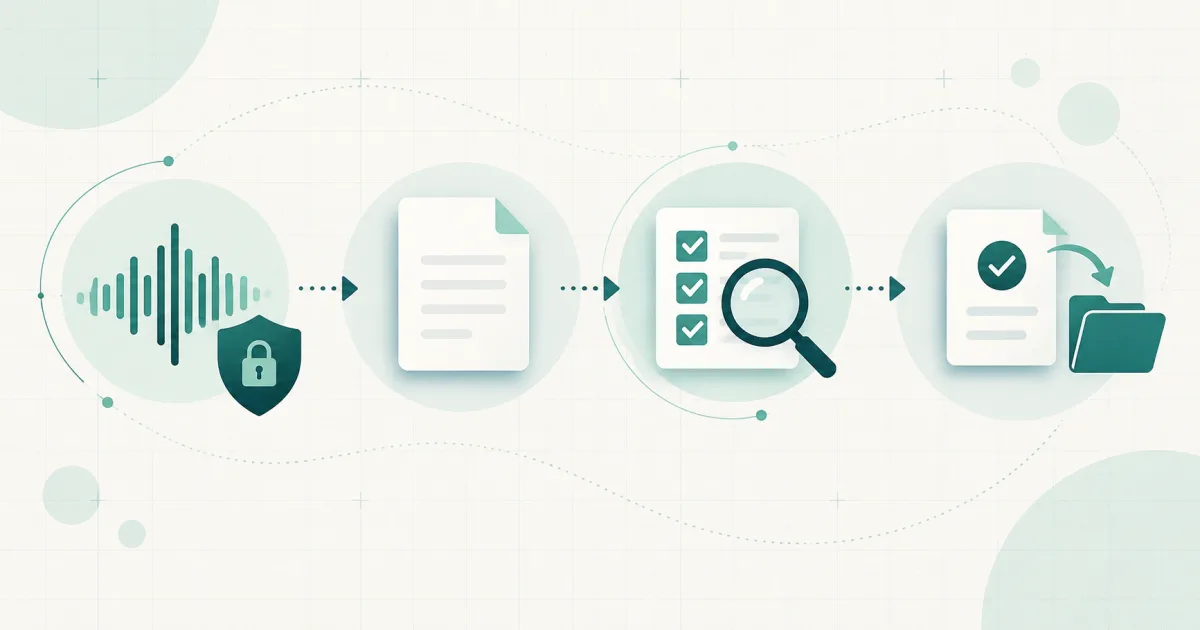
Ambient tools may capture audio, transcripts, conversation summaries, and EHR context. Each data type needs a consent, retention, and review plan.

Draft note review

AI-generated notes should be treated as drafts until an accountable clinician reviews and approves them.

Recommended Healthcare AI Tools

Abridge

Ambient clinical documentation platform for health systems, generating draft documentation from clinical conversations for clinician review.

Visit website
Microsoft DAX Copilot

Ambient and generative AI documentation assistant for Dragon Medical One workflows.

Visit website
Suki

AI assistant for clinicians spanning pre-charting, documentation, clinical reasoning support, and workflow assistance.

Visit website
Nabla

Ambient AI assistant that generates clinical notes and supports clinicians during documentation workflows.

Visit website
DeepScribe

Ambient AI medical scribe for specialty and chronic care documentation workflows.

Visit website
Freed

AI medical scribe and clinician assistant that creates visit notes from encounters.

Visit website
Heidi Health

AI medical scribe that assists clinicians by transcribing consultations and generating clinical notes or documents.

Visit website
Commure Ambient AI

Clinical documentation platform that captures clinical interactions, structures documentation, and supports downstream workflows inside EHR environments.

Visit website
Augmedix

Ambient AI medical documentation suite for health systems, hospitals, and clinics.

Visit website
Ambience Healthcare

AI platform for clinical documentation and coding-ready notes across clinical workflows.

Visit website
Oracle Health Clinical AI Agent

AI-powered workflow assistant for chart summaries, documentation, orders, scheduling, and clinical-administrative workflows in Oracle Health environments.

Visit website

FAQs

Should AI scribes post notes directly to the EHR?
Most healthcare buyers should preserve clinician review before final chart posting, especially during pilots and specialty expansion.
What should a documentation AI pilot measure?
Measure note turnaround, clinician edit burden, documentation quality, consent workflow reliability, and user adoption by specialty.
LogoHealthAIdir

Independent AI tool reviews for healthcare professionals

©HealthAIdir
Product
  • Reviews
  • Free Tools
  • Solutions
  • Categories
  • Compare
Resources
  • Glossary
  • Blog
  • Pricing
  • Search
  • Collection
  • Tag
Company
  • About Us
  • Privacy Policy
  • Terms of Service
  • Sitemap
Copyright © 2026 All Rights Reserved.

A solution guide for evaluating ambient documentation, AI medical scribes, SOAP note generation, and EHR documentation workflows.

Summary

Clinical documentation AI should reduce clinician documentation burden while preserving patient consent, clinician review, note quality, and chart accountability.

Workflow checkpoints

Encounter capture

Ambient tools may capture audio, transcripts, conversation summaries, and EHR context. Each data type needs a consent, retention, and review plan.

  • Define when patient consent is required and how it is documented.
  • Test noisy rooms, interruptions, specialty vocabulary, and complex visits.
  • Review where audio, transcripts, and generated notes are stored.

Draft note review

AI-generated notes should be treated as drafts until an accountable clinician reviews and approves them.

  • Measure clinician edit time and note completion time.
  • Track substantial corrections and ignored AI output.
  • Avoid automatic chart posting without review governance.

Evaluation criteria

  • Specialty fit for templates, terminology, visit type, and documentation style.
  • EHR workflow fit for chart context, draft posting, and clinician review.
  • Patient consent process and handling of audio, transcripts, and generated notes.
  • BAA availability, retention controls, audit logs, and model-training policy.
  • Measured reduction in after-hours documentation and clinician edit burden.

Recommended tool categories

Enterprise ambient scribes

Tools built for larger clinical organizations that need EHR workflow support, deployment controls, and specialty configuration.

Related tools: abridge, microsoft-dax-copilot, suki, commure-ambient-ai, ambience-healthcare

Lightweight clinical note assistants

Tools that help clinicians generate draft notes faster, often with simpler setup and clearer individual-user workflows.

Related tools: nabla, freed, heidi-health, deepscribe

Compliance considerations

  • Confirm how audio and transcript data are stored, retained, deleted, and audited.
  • Review BAA terms, subprocessors, model-training exclusions, and support access.
  • Define clinician review before AI-generated content becomes part of the medical record.
  • Review consent requirements and specialty-specific documentation risks.

Medical and editorial note

This solution guide is for healthcare technology research. It is not medical advice and does not replace clinician judgment, patient consent policy, or privacy review.